
Blue light glasses turn up in optical displays, in ads, and in a lot of questions from patients who spend long stretches in front of a screen.
Blue light filtering lenses are a popular option for people who spend long stretches in front of digital screens. By filtering a portion of blue light, these lenses may help reduce blue light scatter, which can contribute to a clearer and more comfortable visual experience. Blue light also plays an important role in regulating the body’s circadian rhythm.
Research on blue light filtering and eye strain is still evolving, and studies have not consistently demonstrated a measurable reduction in objectively assessed eye strain. For many people, blue light filtering can be one part of a personalized digital lens solution.
What Blue Light Is and Where It Comes From
Blue light is simply one part of the visible light spectrum, the same range of light you see every day. It isn’t rare or hidden.
Your phone, laptop, tablet, and LED bulbs all emit some blue light. Blue light is also naturally present in sunlight and plays an important role in helping regulate your body’s circadian rhythm.
Sunlight brings UV along with it, and UV builds up damage over the years in ways blue light doesn’t. Wear sunglasses that block UVA and UVB rays whenever you’re outside, even in winter.
What Blue Light Glasses Do
These lenses filter out a portion of blue wavelengths before light reaches your eyes. Depending on the lens design, blue light filtering can also help reduce blue light scatter, which may improve visual clarity and comfort during digital screen use.
Blocking more blue light typically creates a more noticeable amber tint, which can change how colors appear. Some digital lenses are designed to provide blue light filtering while maintaining a relatively clear appearance.
Some stay clear enough that nobody notices, while others carry a faint yellow cast you’ll see in the mirror. Order either with a built-in prescription or as plain lenses if you don’t need correction.
Ask our optical team about anti-reflective coatings while you’re choosing, and about frames that sit properly on your face.
Blue Light Filtering and Eye Comfort
Research on blue light filtering lenses and eye strain is still evolving. While studies have not consistently demonstrated a measurable reduction in objectively assessed eye strain, patients can have different experiences when wearing these lenses.
Some patients report that their eyes feel more comfortable during extended periods of screen use and notice an improvement in their overall eye symptoms. Blue light filtering may also help reduce blue light scatter, which can support visual clarity and comfort.
Because screen-related discomfort can have several causes, your optometrist can help determine whether blue light filtering or other digital lens features may be appropriate for your individual visual needs.
Blue Light, Digital Screens, and Your Circadian Rhythm
Blue light plays an important role in regulating your body’s circadian rhythm, or internal sleep-wake cycle. Because blue light plays a role in regulating your circadian rhythm, blue light filtering may be a useful lens feature for people who spend significant time using digital devices, particularly in the evening.
If you spend significant time using your phone, tablet, or computer in the evening, ask your optometrist whether blue light filtering may be a useful feature for your digital lenses.
Your routine matters more here. Keep a consistent bedtime and put the phone down once you’re in bed.
Other Reasons for Tired Eyes
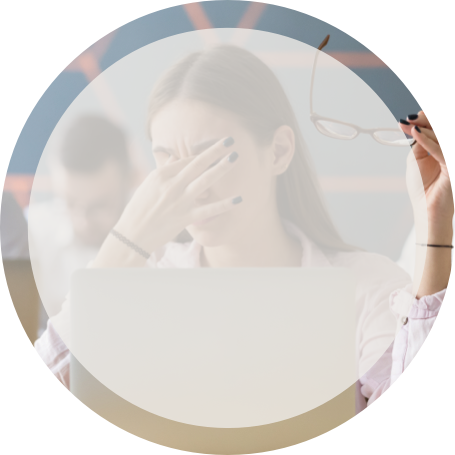
Your blink rate drops sharply when you concentrate on a screen, which leaves your eyes drier than usual. Holding focus at close range for hours asks a lot of your focusing muscles.
Your setup adds to the load. Optometrists group these symptoms together under computer vision syndrome, and a handful of everyday factors tend to drive it:
- Glare bouncing off your monitor or off a window behind you
- Screen brightness set well above the light level in the room
- A monitor sitting too close, too high, or at an awkward angle
- Text small enough that you lean in without noticing
- An outdated prescription or subtle eye misalignment

Habits That Can Ease Eye Strain
The right digital lenses can be one part of a more comfortable screen routine. Pairing your lenses with healthy screen habits can provide additional support for your eyes throughout the day.
- Follow the 20-20-20 rule and look at something 20 feet away for 20 seconds every 20 minutes.
- Blink fully and often, and keep artificial tears within reach for dry spells.
- Sit about an arm’s length from your screen, with the top of the monitor just below eye level.
- Match your screen brightness to the room instead of running it at maximum.
- Enlarge the font so you stop leaning forward to read.
A humidifier can help if your office air runs dry. If the dryness continues regardless, dry eye therapy opens up options well beyond drops.
When to See an Optometrist About Eye Strain
Screen habits explain a lot of tired eyes, though some symptoms point elsewhere. Book an exam if you notice:
- Headaches that start during or after screen work
- Blurriness that doesn’t clear when you look up
- Eyes that feel gritty, dry, or unusually watery
- New sensitivity to light
- Squinting or leaning toward the screen to read
Bring your questions along. Ask whether filtering lenses suit the way you work and whether your prescription is due for an update. Screen habits affect the whole household, so ask about the kids and grandparents at the same visit. Children’s eye exams and adult and senior eye exams can often be scheduled back to back.
Find Out What’s Behind Your Tired Eyes
An eye exam can help identify what’s contributing to your tired eyes and which lens features may best fit your day. Depending on your screen habits and visual needs, blue light filtering can be one option to consider as part of your digital eyewear.
Our optometrists at Family Vision Care can walk you through your options and answer any questions you have.
Book an appointment and find out what’s causing your tired eyes!