Rosacea gets mistaken for sensitive skin all the time. Redness arrives, fades, then comes back weeks later, so people often spend years blaming the weather or a new moisturizer.
Rosacea is not classified as an autoimmune disease, although an overreaction of the immune system may play a role in how it shows up. When rosacea involves your eyes, the irritation often overlaps with dry eye, so dry eye therapy can become part of the plan.
What Rosacea Actually Is
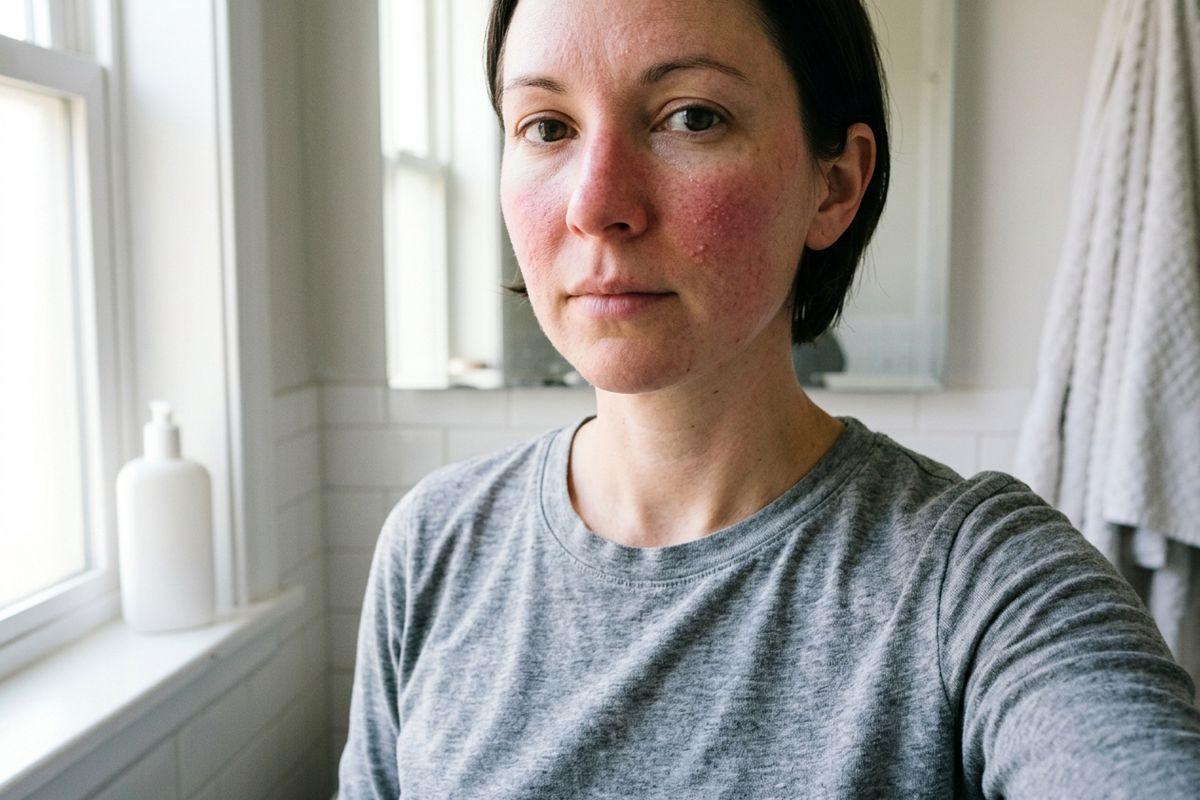
Anyone can develop this long-term skin condition, though it tends to appear in fair-skinned adults and usually starts after age 30. The redness settles across the cheeks, nose, and forehead.
Flares fade on their own, which makes rosacea easy to dismiss early on. Watch for a few of these on your skin:
- Flushing that lasts longer than a normal blush
- Visible blood vessels across the cheeks and nose
- Small red bumps that look like acne
- Skin that stings or burns when you apply products
- Thickened skin around the nose, which shows up less often
Is Rosacea an Autoimmune Disease?
An autoimmune disease happens when the immune system attacks healthy tissue by mistake, the way it does in lupus or rheumatoid arthritis. Rosacea doesn’t work that way, so it falls into its own category.
The immune system still gets some of the blame, though. Researchers point to an overactive innate immune response, changes in the blood vessels near the surface of the skin, and microscopic mites that live on all of us in small numbers. The full picture isn’t settled yet.
That distinction changes what treatment looks like. Rosacea care aims to calm inflammation and avoid triggers rather than suppress the immune system the way autoimmune conditions often require.
Studies have connected rosacea to higher rates of thyroid antibodies and a few autoimmune conditions, so mention it to your primary care provider if either runs in your family.
Rosacea Versus Lupus Rash
The two can look similar at a glance, but they differ. A lupus rash tends to bring scaly, itchy patches, while rosacea shows up as red, bumpy, swollen skin.
How Rosacea Affects Your Eyes
Roughly 50% of people with rosacea also develop ocular rosacea, which affects the eyelids and the tear film that keeps the surface of your eye comfortable.
Much of that comes down to the tiny oil glands along your lash line. When inflammation thickens the oil they produce, tears evaporate faster than they should, and your eyes can feel dry even while they’re watering.
Eye symptoms can arrive before any facial redness. So irritation you’ve chalked up to screen time or allergies may deserve a second look.
Signs to Watch For
Here’s what ocular rosacea can feel like day to day:
- A gritty or burning feeling, like sand you can’t blink away
- Watery or bloodshot eyes
- Sensitivity to light
- Styes or swollen lids that keep coming back
- Blurry vision that comes and goes

What Triggers Rosacea Flares
Triggers are personal, and yours won’t match anyone else’s exactly. A handful still show up on most people’s lists: sun exposure, heat, wind, alcohol, and spicy food.
Hot drinks surprise people, and so does moving from a cold car into a warm house. Skincare products with alcohol, witch hazel, or menthol can set off a flare as well.
Caring for Flare-Ups
Keep a short daily journal for a few weeks. Write down what you ate, where you spent your time, and how your face and eyes felt that evening. Patterns tend to show up sooner than you’d expect.
From there, adjust your daily routine. Sunscreen and sunglasses can reduce sun and wind exposure on your face and lids. Wash gently, skip strong fragrances, and treat your lash line with the same care you give the rest of your skin.
Treatment Options for Ocular Rosacea
Start with an exam. Your optometrist can take a close look at your lid margins, oil glands, and tear film, which is usually where ocular rosacea shows up first.
IPL, or intense pulsed light, is one option we may discuss. It targets the inflamed vessels around the lids and can help the oil glands along your lash line work more normally. Daily lid hygiene matters just as much. Warm compresses loosen thickened oil, and a gentle lid cleanser clears away debris that builds up overnight.
Depending on what the exam shows, your optometrist may also suggest prescription drops, an oral medication, or an omega-3 supplement. Many people end up using two or three of these together.
When to Book an Appointment
Reach out when irritation, redness, or blurry vision keeps returning instead of clearing up on its own. A family history of rosacea or dry eye is another good reason to have your eyes checked rather than wait it out.
Get Your Eyes Comfortable Again
Rosacea may not be autoimmune, but it can still make your eyes miserable, and it can respond to a routine you can stick with.
Family Vision Care can examine your lids and tear film, talk through your daily habits, and suggest options that fit how you actually live. Book an appointment and bring your questions along!